
Citation Checker · Data · Academic Integrity
One Year of Checking Citations: 2 Million References, and 1 in 5 We Could Not Find
A year after CiteTrue launched: over 2,000,000 citations checked for 40,000+ researchers, and what the verdict breakdown actually tells us.
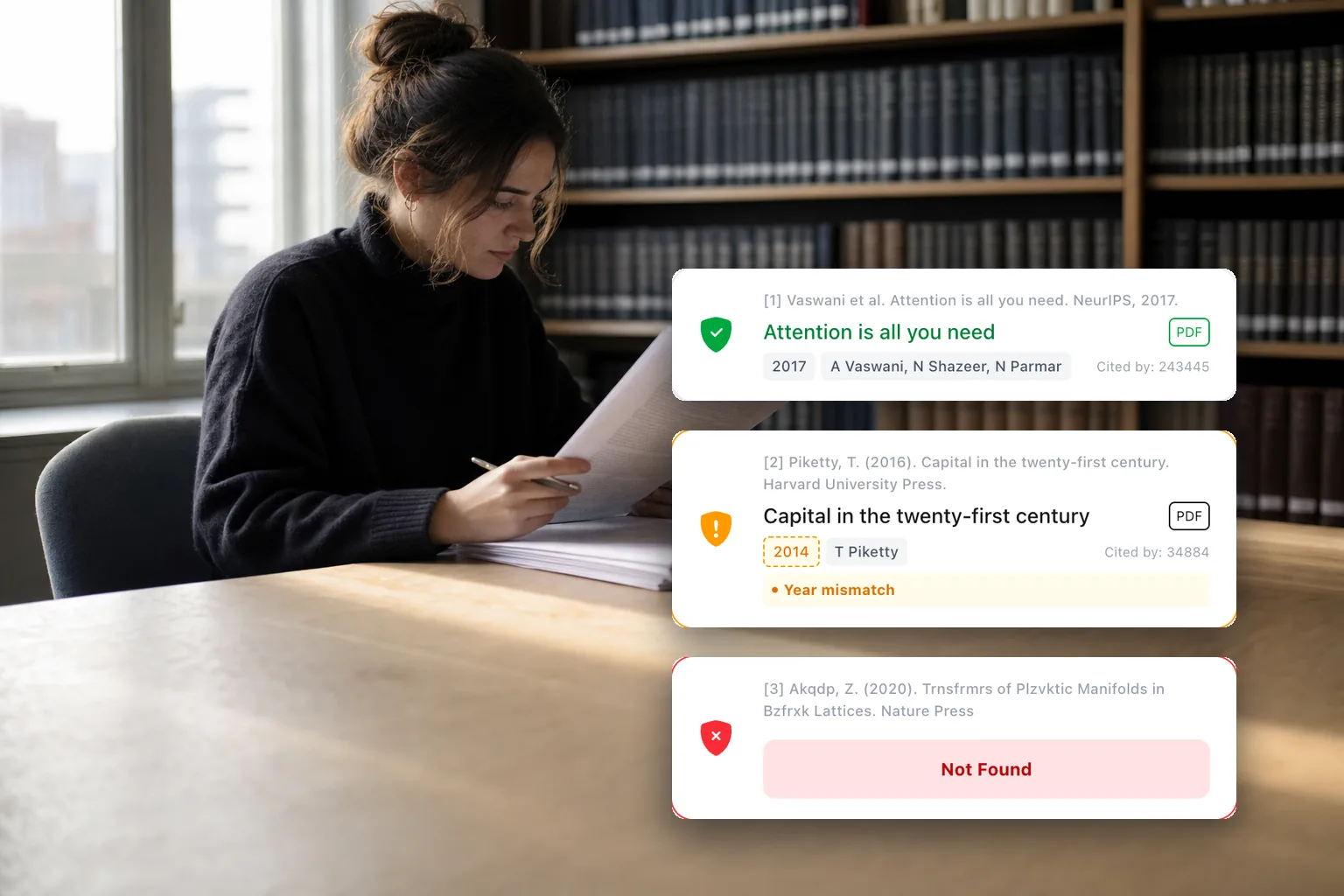
We registered this domain a year ago today.
Since then CiteTrue has checked over 2,000,000 citations for 40,000+ researchers, students and editors. This post is what a year of that looks like from the inside: what the checks actually found, when people used us and when they didn’t, and what we think that means.
What the checks found
Every reference that goes through the checker comes out with one of four verdicts. Across all the references we have returned a verdict on:
| Verdict | Share | What it means |
|---|---|---|
| Authentic | 78.2% | We found the work. Title, authors and venue line up with a real record. |
| Not found | 19.0% | We searched and nothing matched. |
| Invalid | 2.4% | The entry was too damaged to be a citation at all. |
| Unsure | 0.4% | We found something close and would not commit either way. |
The number that stops people is the second one. Roughly one in five references we have been asked to check could not be matched to any record we could find.
That deserves an honest caveat before anything else: not found is not the same as fabricated. Our searches cover a lot of scholarly ground, but not all of it. A monograph from a small regional press, a thesis that never left a university repository, a paper in a journal that has no online presence, a conference proceeding from 1987 — all of these are real works that a search can miss. Some share of that 19% is honest scholarship that simply is not indexed anywhere we can reach.
But it is not all of it. The published research on fabricated references puts the rate for language-model output in the same neighbourhood: when Walters and Wilder asked ChatGPT for literature reviews across 42 topics, 55% of the references produced by GPT-3.5 and 18% of those produced by GPT-4 did not exist at all. A number of the manuscripts we see were drafted with help from a model, and a fabricated reference is specifically engineered to survive a glance: real authors who work in the field, a real journal, a plausible title, a DOI that resolves to nothing or to something else. It reads correct. That is the whole problem, and it is why a human spot-check of two or three references is close to worthless — the fabrications are indistinguishable from the real ones until you actually look each one up.
The other two verdicts are smaller but say something too.
Invalid, at 2.4%, is mostly damage in transit: a reference truncated by a copy-paste out of a PDF column, OCR that turned a title into noise, a bare URL with no metadata attached, a line that is half of one citation and half of the next. It is a reminder that a lot of bibliography problems are not integrity problems at all — they are formatting accidents that a reviewer will still hold against you.
Unsure, at 0.4%, is deliberately small. It would be easy to build a checker that hedges: return “possibly” on anything ambiguous and you can never be accused of being wrong. It would also be useless, because a verdict that shifts the decision back onto the reader saves the reader nothing. We would rather commit and occasionally be corrected. When we do say unsure, we show the closest candidate we found and the confidence behind it, so the judgement call is at least an informed one.
The flip side of 19% is worth stating plainly as well: 78.2% of everything we check is fine. The typical reference list is in good shape. The checker is not mostly a machine for finding problems; it is mostly a machine for letting you stop worrying about ninety-odd references so you can deal with the handful that need attention.
The shape of the year
Usage was not evenly spread. May 2026 was our busiest month by a clear margin — more citations checked, more people checking them, and more new accounts than any other month before or since.
May is not a mystery. It is the end of the spring semester across most of the Northern Hemisphere: dissertations go in, final papers go in, and the last thing anyone does before submitting is check the bibliography. The months on either side behave exactly the way that explanation predicts. The climb ran from January through May as deadlines approached; the descent ran through a Northern-Hemisphere summer when there were no deadlines to approach.
It is also not just us. Search interest in “citation checker” has run the same four-beat cycle for five straight years, according to Google Trends: a spring peak around March and April, a deep collapse across the Northern-Hemisphere summer, the year’s high in October and November, and a dip over the winter break.
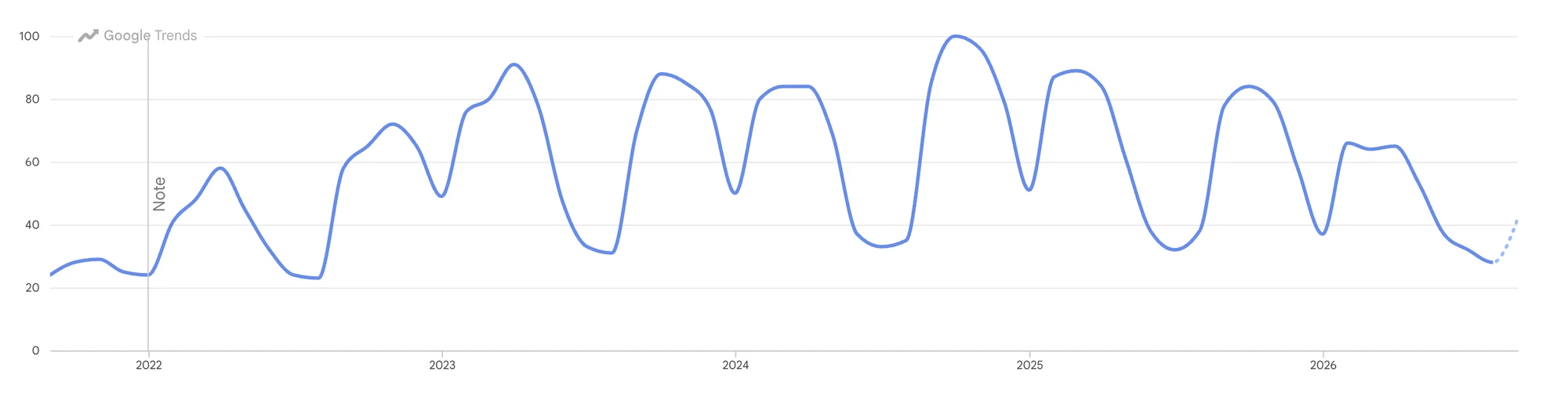
Relative search interest in “citation checker”, 2021–2026. Google Trends normalises each series to its own maximum, so the axis is 0–100 against the highest point in the window, not an absolute volume. The dotted tail is Google’s incomplete-data segment. Source: Google Trends.
Our own curve sits on top of that one with a small, sensible offset: search interest peaks in March and April, our usage peaked in May. People go looking for a checker when they start worrying about the bibliography, and actually run it when the deadline arrives a few weeks later. The summer collapse lines up almost exactly.
Two things in that chart are worth not skipping past. The first is that the autumn peak, not the spring one, is usually the year’s high — which is the ramp we are still waiting on. The second is less comfortable: the 2026 peaks are visibly lower than those of 2023, 2024 and 2025. Interest in this whole category is down year over year, not just seasonally, and we have no basis for claiming our own numbers are immune to that.
What convinced us this is the academic calendar rather than something wrong with the product is a quieter statistic. Through the whole rise and the whole fall, the amount of work an individual active user did in a month barely moved. People who showed up in August checked about as many references as people who showed up in May — slightly more, in fact. The swing was almost entirely in how many people showed up, not in what they did once they arrived. A product getting worse loses usage per user first. This did not.
So the honest reading is two things at once. The seasonal pattern is real, external and the strongest signal in the data; the level the season swings around has also come down. What we expect next is the part both curves agree on: a year ago the autumn ramp did not arrive with the first week of term but with the first round of deadlines several weeks later, and the last points on the Trends line have just turned up. We are in that gap right now.
What we built while this was happening
The checker was the whole product a year ago. It is now one of four:
- Citation Checker — paste a reference list, get a verdict and a source for each entry.
- Citation Finder — paste a passage and find the real work behind a claim.
- Paper Draft — go from a topic to a sourced draft where each section is tied to papers that exist.
- AI Humanizer — rewrite for tone without breaking the citations in the text.
Around them: a Mac app, a Chrome extension, a public API and an MCP server so other tools can call the checker directly.
What comes next
Two things we want to be true a year from now.
A smaller “not found” number that means more. Nineteen percent is partly fabrication and partly the limits of our reach, and those two deserve different answers. The second is a coverage problem: more sources, better handling of books, theses, non-English scholarship and everything that lives outside the big indexes. Every source we add moves honest work out of the not found bucket and leaves the fabrications behind, which makes the number that remains more worth acting on.
Catching problems earlier. A citation checked at submission is a citation caught late — the draft is written, the argument is built on it, and removing a reference means rewriting a paragraph. Everything we have built since the checker points the same direction: get the real source in front of the writer while the sentence is being written, not three months later.
Thank you to everyone who spent part of this year submitting a reference list to a website they had not heard of the week before. The 19% is why this exists.
Numbers in this post cover 16 September 2025 through 16 September 2026. Verdict shares are calculated over references that returned a verdict; checks that were interrupted, errored or stopped at a quota limit are excluded.
Related posts

Research · Evaluation
Jev vs. Six LLMs on Citation Matching: 5× Faster, 6–440× Cheaper, and What It Gives Up in Accuracy
TypeSafe's Jev decision model against Gemini, Claude and GPT on 60 hard citation-matching cases: 0.15 s and $0.04 per 1,000 judgments, and what it gives up.
26 min read
Paper Draft · Academic Writing
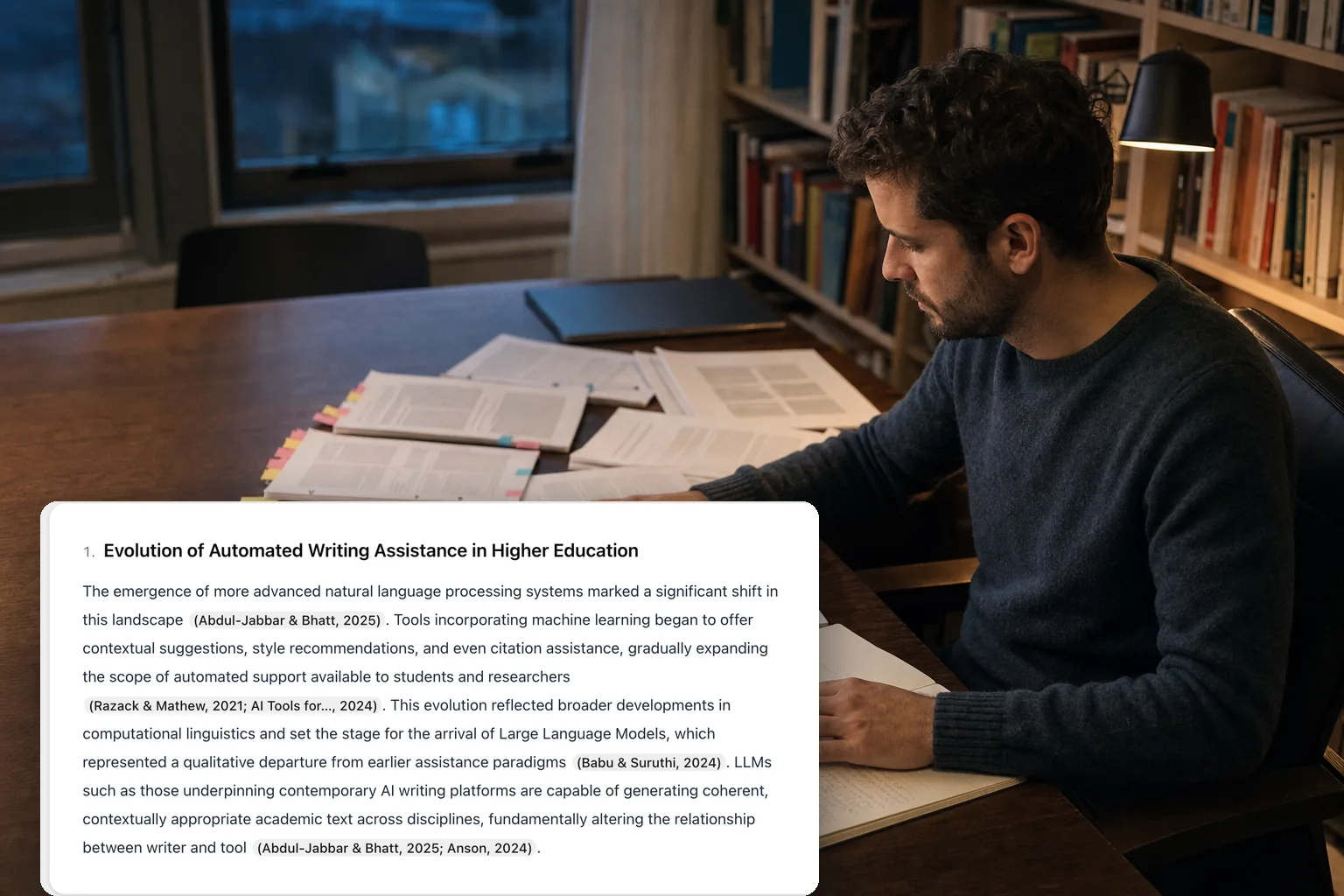
Paper Draft: How to Find Real Academic Sources for Any Topic
From topic to sourced draft: search 17 academic databases, pin your own DOIs, and tie every sentence to a paper that exists, in APA, MLA, IEEE and more.
9 min read